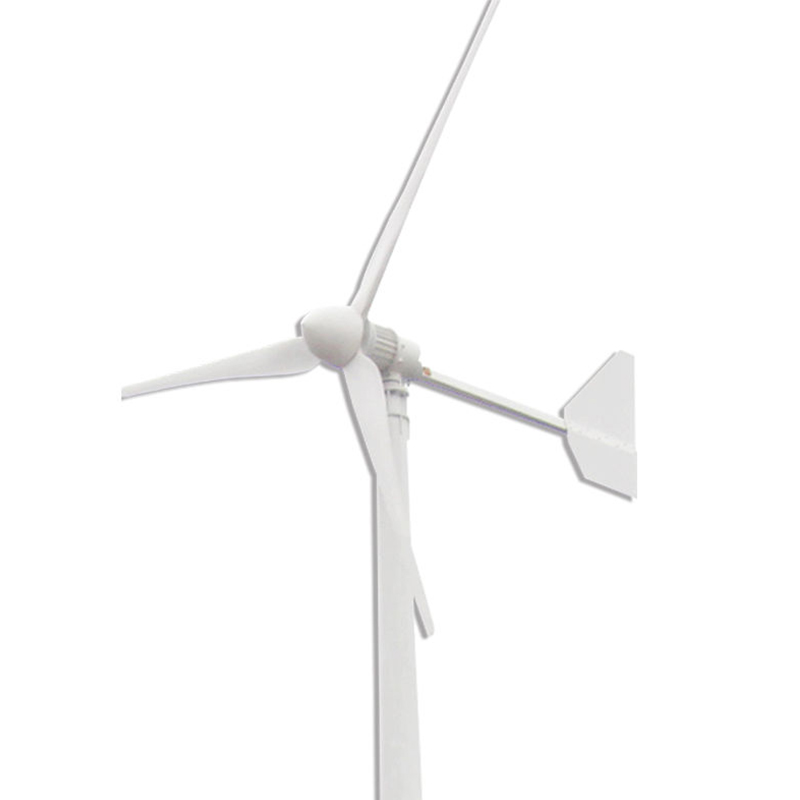


This is a highly efficient wind generator that can operate in low wind conditions. With options for 96/120/220/380v, it is compatible with various power systems. Its impressive features include a low start-up speed, allowing it to generate electricity even in low wind environments, making it a reliable and environmentally-friendly source of renewable energy.
| Power: | 5kW |
|---|---|
| System Type: | Horizontal Wind Turbine |
| Quantity: | |
|---|---|
| Rated power | 5kW | Rated voltage | AC 96/120/220/380V |
| Start-up wind speed | 2m/s | Working wind speed | 2.5-18m/s |
| Rotor diameter | 5.2m | Blade length | 2.6m |
| Shell material | Casting aluminum alloy | Generator type | 3-phase AC PMG |
| Speed regulation & protection | Yawing + electromagnetic brake | Weight | 245kg |
The 5kW wind turbine emerges as a versatile workhorse in renewable energy generation, balancing performance, durability, and affordability for diverse applications. Engineered with a horizontal axis design and high-strength components, this mid-sized turbine delivers reliable power output across a wide range of wind conditions, from gentle breezes to moderate gusts. Its 2.5m/s cut-in speed ensures early activation, while robust construction handles winds up to 18m/s for maximum durability. Suitable for both off-grid installations and grid-connected systems, this turbine serves as a primary or supplementary power source for homes, small businesses, and rural electrification projects, offering a sustainable alternative to fossil fuel generators.
Equipped with a three-phase permanent magnet generator, the turbine converts wind energy to electricity with >85% conversion efficiency at rated wind speed (10m/s). The direct-drive transmission eliminates gearbox losses, reducing maintenance needs while ensuring smooth operation. Under optimal conditions, it achieves a maximum power output of 9.5kW, providing ample energy reserves during peak demand periods.
The turbine's five fiberglass-reinforced plastic blades measure 2.6 meters in length and feature a C-shaped design that enhances airflow capture by 30% compared to conventional blade profiles. The rotor assembly, with a 4-meter diameter, balances stability and energy harvest, while corrosion-resistant materials protect components in coastal, agricultural, or industrial environments.
Compatible with both battery storage systems (typically 240V with 300Ah capacity) and grid-tie inverters, the turbine adapts to various energy needs. The integrated controller manages charging cycles, preventing over-discharge and optimizing battery life. In grid-connected mode, it complies with voltage and frequency stability requirements, enabling net metering participation in eligible regions.
Ideal for rural homes and homesteads, the turbine can supply 3-5 average households with primary electricity when paired with 20+ kWh storage. It reduces grid dependency by 60-70% in windy regions, providing significant long-term savings on utility bills.
Farmers utilize the turbine to power irrigation pumps, ventilation systems, and livestock facilities. Its ability to operate in remote locations eliminates the need for expensive grid extensions, while reliable output supports consistent agricultural productivity.
In developing regions or remote communities, multiple 5kW turbines combine to form mini-grid systems, providing essential power for schools, clinics, and communal facilities. The modular design allows for phased expansion as energy demands grow.
Optimal performance requires a 9-meter tower to elevate the turbine above ground turbulence and obstructions. This height ensures consistent exposure to wind resources, maximizing annual energy production by up to 40% compared to lower installations.
Scheduled maintenance includes quarterly inspections of connections and annual lubrication of moving parts. The generator and blades are designed for 10,000+ operating hours before major service, while the controller may require software updates every 2-3 years to maintain optimal performance.
In areas with average wind speeds of 6m/s, the turbine generates approximately 8,000-12,000 kWh annually – enough to power a typical household's essential needs. Higher wind regions (8m/s+) can achieve 15,000+ kWh/year, with output varying proportionally to wind speed cubed as per standard wind energy principles.