

Wind Turbine Manufacturer - Naier Wind Power
Introduction
Wind energy has become one of the most efficient and scalable sources of renewable power in modern times. The wind itself originates from the uneven heating of the Earth’s surface by the sun, combined with variations in terrain and the planet’s rotation.
As global energy demand grows, wind turbines are playing a key role in reducing dependency on fossil fuels and supporting sustainable development goals. Around the world, both governments and private sectors are investing heavily in wind power technology to reduce carbon emissions and secure long-term energy resilience. In the renewable energy sector, three related terms often appear: wind turbine, wind generator, and wind mill.
A wind turbine is a modern, high-efficiency machine designed to convert kinetic energy from the wind into electrical power. The term wind generator highlights the component responsible for electricity production inside the turbine, while wind mill traditionally refers to mechanical systems that used wind energy for grinding grain or pumping water. These devices demonstrate how humanity has long relied on wind power — from early agricultural uses to today’s advanced renewable energy generation.

Product Advantages
YXNEFD wind turbine systems deliver a balanced combination of advanced design, high performance, and environmental responsibility. Through aerodynamically optimized blades, intelligent control systems, and durable direct-drive technology, they achieve superior energy output and long-term reliability. Their modular structure, low maintenance needs, and adaptability to diverse terrains make them a cost-effective and sustainable choice for modern wind power projects.
Advanced Engineering & Intelligent Design
Naier wind turbine systems combine advanced engineering with field-tested reliability, delivering superior performance under diverse conditions. The aerodynamically optimized blades are designed to maximize energy capture while minimizing turbulence and noise. Intelligent control systems automatically manage smart pitch and yaw adjustments, improving power output and extending equipment lifespan.
Superior Performance & Cost Efficiency
From a performance standpoint, Naier turbines feature low start-up wind speeds and high operational stability even under fluctuating wind conditions. The direct-drive system minimizes mechanical wear, extending service intervals and reducing maintenance costs. Modular manufacturing and simplified installation ensure exceptional cost efficiency, making these turbines ideal for both new wind farms and replacement projects.
Eco-Friendly Design & Reliable Service
Naier turbines operate with low noise levels and adapt easily to complex terrains, from coastal zones to mountainous regions. Their compatibility with hybrid renewable systems—such as solar arrays and battery storage—enables flexible, integrated energy solutions. The company also provides outstanding after-sales support, including 24/7 monitoring, remote diagnostics, and rapid spare-part delivery for long-term reliability.
Naier Wind Power's Core Product Lines

Horizontal Wind Turbine
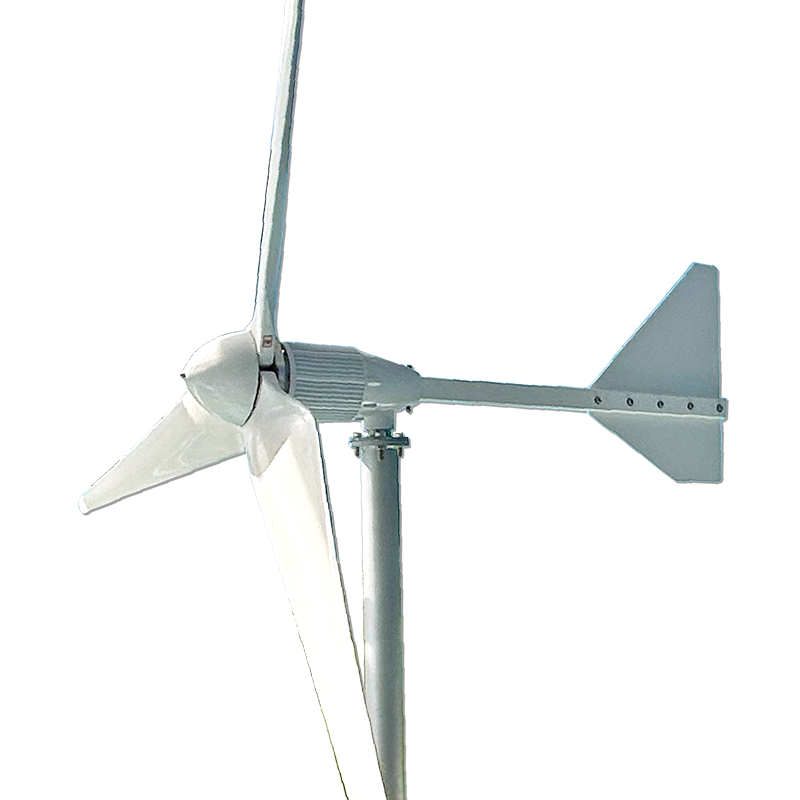
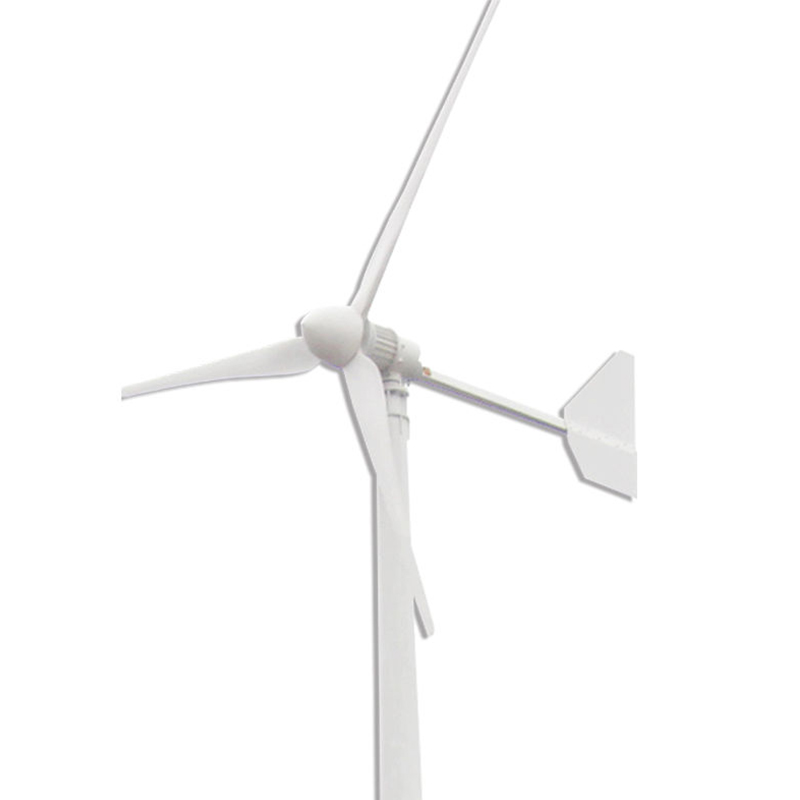
Our horizontal turbines range from 1 kW to 100 kW and suit rooftops, farms, commercial sites, and microgrids. We use fiberglass blades with low-wind start features, and offer fixed-pitch or active pitch models with direct-drive or geared options. They work on-grid or off-grid and integrate with hybrid energy setups.

Vertical Wind Turbine
Our vertical turbines span 500 W to 20 kW, including H-type, spiral, and Q10 designs. They start in gentle breezes, operate quietly, and fit compact spaces. Modular and lightweight, they are ideal for rooftops, ships, or hybrid solar-wind systems.

Permanent Magnet Generator
We provide permanent magnet generators (1–300 kW) for our turbines or standalone use. They are compact, efficient, quiet, and reliable. Our PMGs ensure efficient energy conversion, strong performance, and long-term durability in all our wind generator systems.
Certificates
We always focus on customers, pay attention to their needs, provide high-quality products and excellent services to meet their expectations.


Contact us for a quick solution to your needs
From drawing to deployed turbine, Naier delivers one‑stop customization and lifetime support. Send your drawings or samples now—get a tailored solution and quote within 24 hours.


How a Wind Turbine Works
1. Energy Capture and Conversion:
Aerodynamic Principles: The turbine blades are shaped to create a pressure difference, generating lift on one side and drag on the other, causing the rotor to spin.
Kinetic to Mechanical Energy: The rotating rotor transfers kinetic energy from the wind into mechanical energy via the main shaft.
2. Mechanical and Electrical Integration:
Gearbox vs. Direct-Drive: Gearboxes increase the rotational speed of the shaft for the generator, while direct-drive systems eliminate the gearbox for improved reliability and reduced maintenance, especially in offshore applications.
Energy Conversion: The mechanical energy from the rotor is transferred to the generator, where it is converted into electrical energy.
3. Control Systems and Power Transmission:
Pitch Control: Adjusts the angle of the blades to optimize wind energy capture.
Yaw Control: Keeps the rotor aligned with the wind direction.
Braking Systems: Ensure safety in extreme weather conditions.
Power Output: The generated electricity is passed through a transformer to adjust voltage before being sent to the power grid.
OEM Service
Tailored Customization
If you have drawings (dimensions, materials, special requirements), we build the molds and optimize the design. If you have only samples, our engineers will measure, model, and create drawings. We customize 100W–500kW horizontal/vertical turbines, permanent‑magnet generators, and wind–solar hybrid systems—covering appearance, rated voltage, controller/inverter matching, tower height, and branding.
Precision Manufacturing & Compliance
ISO‑certified production with strict incoming, in‑process, and final inspections. Full‑machine performance and weathering tests, CE/EMC documentation, and complete traceability ensure reliability, safety, and consistency.
R&D & Co‑Engineering
Powered by 50+ patents and a dedicated innovation team, we provide aero/structural simulations, rotor–generator matching, control strategy optimization, rapid prototyping, and design‑to‑mass‑production acceleration—integrating design, manufacturing, installation, commissioning, marketing, and after‑sales.
Global Delivery & Lifetime Support
Export expertise via air, sea, and land logistics for 30+ countries, with products already serving 63 countries worldwide. We offer remote monitoring, scheduled maintenance programs, and 24/7 technical support throughout installation, commissioning, and long‑term O&M.
Get A Quote Now
Mob:+8613961722378
E-mail:jpm@wxftgs.com
Product
At Yixing Naier Wind Power Technology Co., Ltd., we specialize in high-performance small and medium-sized wind energy solutions for a wide range of applications worldwide. With a comprehensive product lineup including horizontal and vertical wind turbines, permanent magnet generators, and supporting system components, our products are engineered for reliability, efficiency, and long-term value.




Types of Wind Turbines
Axis Orientation: Horizontal vs. Vertical
Wind turbines can be categorized by axis orientation. Horizontal-axis wind turbines (HAWT) have blades that rotate around a horizontal hub facing the wind, making them ideal for large wind farms. Vertical-axis wind turbines (VAWT) rotate around a vertical shaft and capture wind from any direction. Although VAWTs are slightly less efficient, they require less space and suit urban or remote installations.
Installation Environment: Onshore, Offshore, and Distributed
Turbines can also be classified by installation location. Onshore turbines are widely used because installation is easier and costs are lower. Offshore turbines benefit from stronger and more consistent winds, improving efficiency. Distributed or small-scale systems serve local energy needs in remote communities or industrial sites, providing flexible energy solutions.
Drive Configuration: Direct-Drive, Gearbox, or Hybrid
Wind turbines are further divided by drive configuration. Direct-drive turbines eliminate mechanical losses and offer higher reliability. Gearbox-driven turbines remain more compact and cost-effective, especially for land-based projects. Hybrid systems combine the benefits of both, optimizing efficiency and maintenance requirements for specific applications.

Download
- Name
- Summary
- Category
- Update
- Size
- Downloads
- Thumbnail
- Download
- Copy Link
- Naier Wind Powe Product Catalogue.pdf
- Download
- 2025-08-21
- 15.87MB
- 74
-
- Download
- Copy Link
- Naier product catalogue.pdf
- Download
- 2025-08-20
- 1.86MB
- 56
-
- Download
- Copy Link
- REPORT ICT202500890-Wind+generator
- Download
- 2025-08-20
- 54.65MB
- 54
-
- Download
- Copy Link
- REPORT XDAQ447255698071048DR-ICT202500890-Wind+generator-CE-EMC
- Download
- 2025-08-20
- 10.28MB
- 41
-
- Download
- Copy Link
- Certificate CE2025.7.15-2030.7.14.pdf
- Download
- 2025-08-20
- 1.85MB
- 47
-
- Download
- Copy Link
- FH-261.pdf
- Product
- 2025-08-15
- 1.28MB
- 39
-
- Download
- Copy Link
- Roller 412AH.pdf
- Product
- 2025-08-15
- 1010KB
- 27
-
- Download
- Copy Link
- BOS Wind Grid-Connected inverter spec..pdf
- Product
- 2025-08-15
- 514KB
- 29
-
- Download
- Copy Link
- 51.2V280Ah.pdf
- Product
- 2025-08-15
- 11.80MB
- 23
-
- Download
- Copy Link
- Instruction manual neutral 51.2V280Ah roller R40 model S019.pdf
- Product
- 2025-08-15
- 5.49MB
- 31
-
- Download
- Copy Link

Contact Us
Related Blogs
-
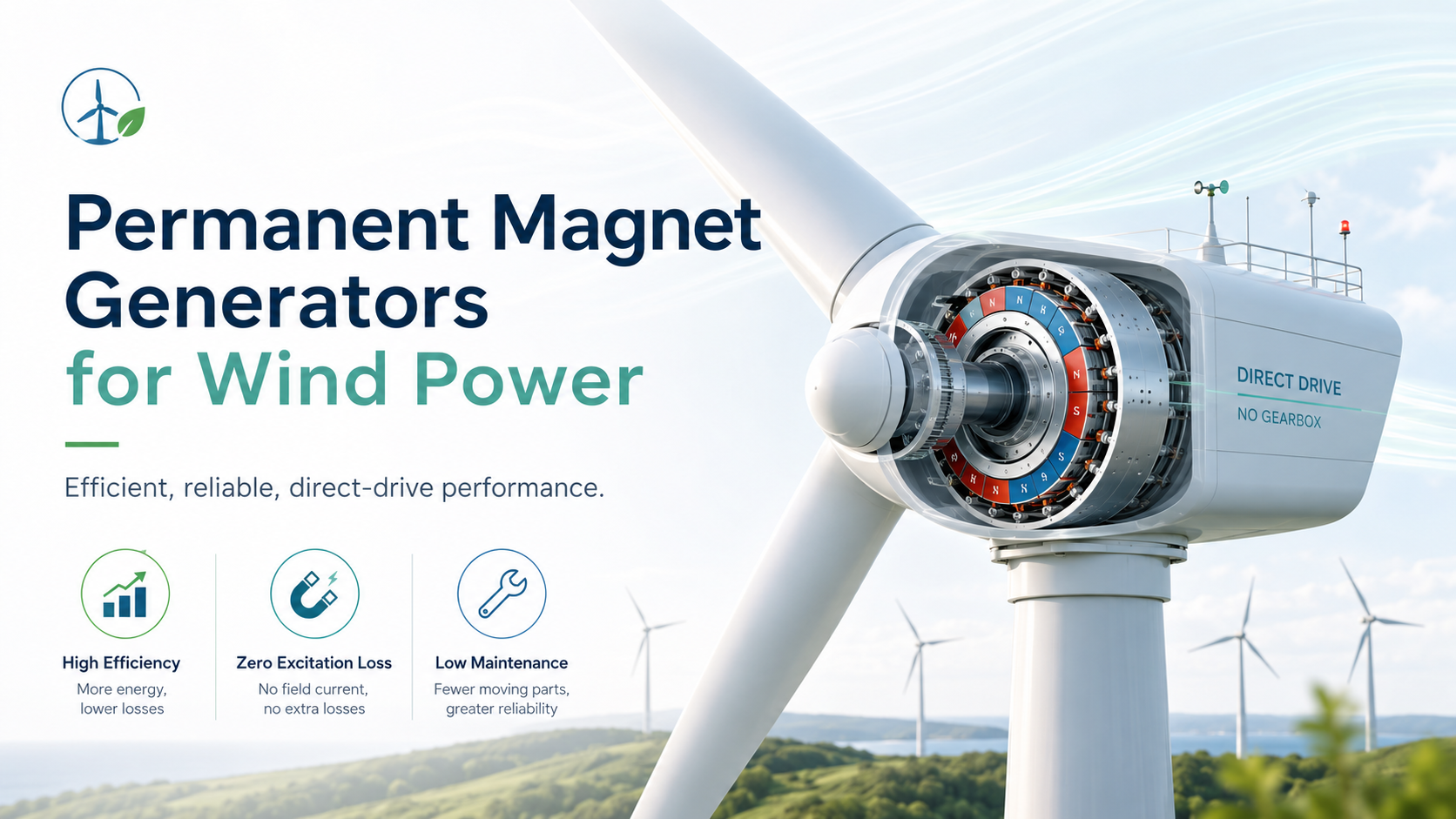 Wind farm profitability constantly battles against high operations and maintenance costs. Mechanical downtime in remote installations quickly erodes profit margins. Traditional geared induction setups rely on heavy, complex gearboxes.
 -
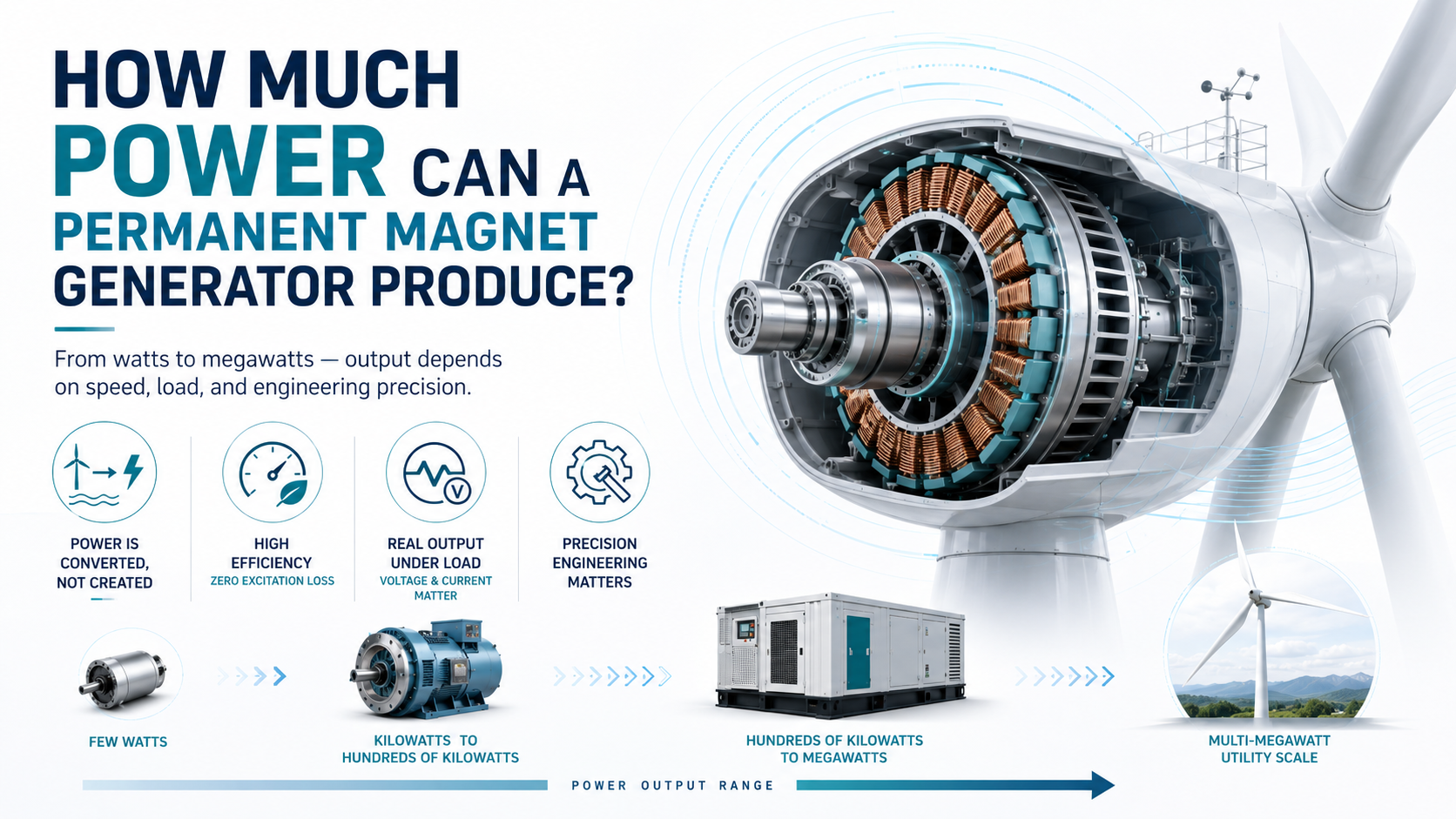 Exactly how much power can a permanent magnet generator produce? The answer spans a massive operational range. These devices generate anywhere from a few watts in micro-turbines to multi-megawatt outputs in utility-scale wind farms and heavy industrial applications.
 -
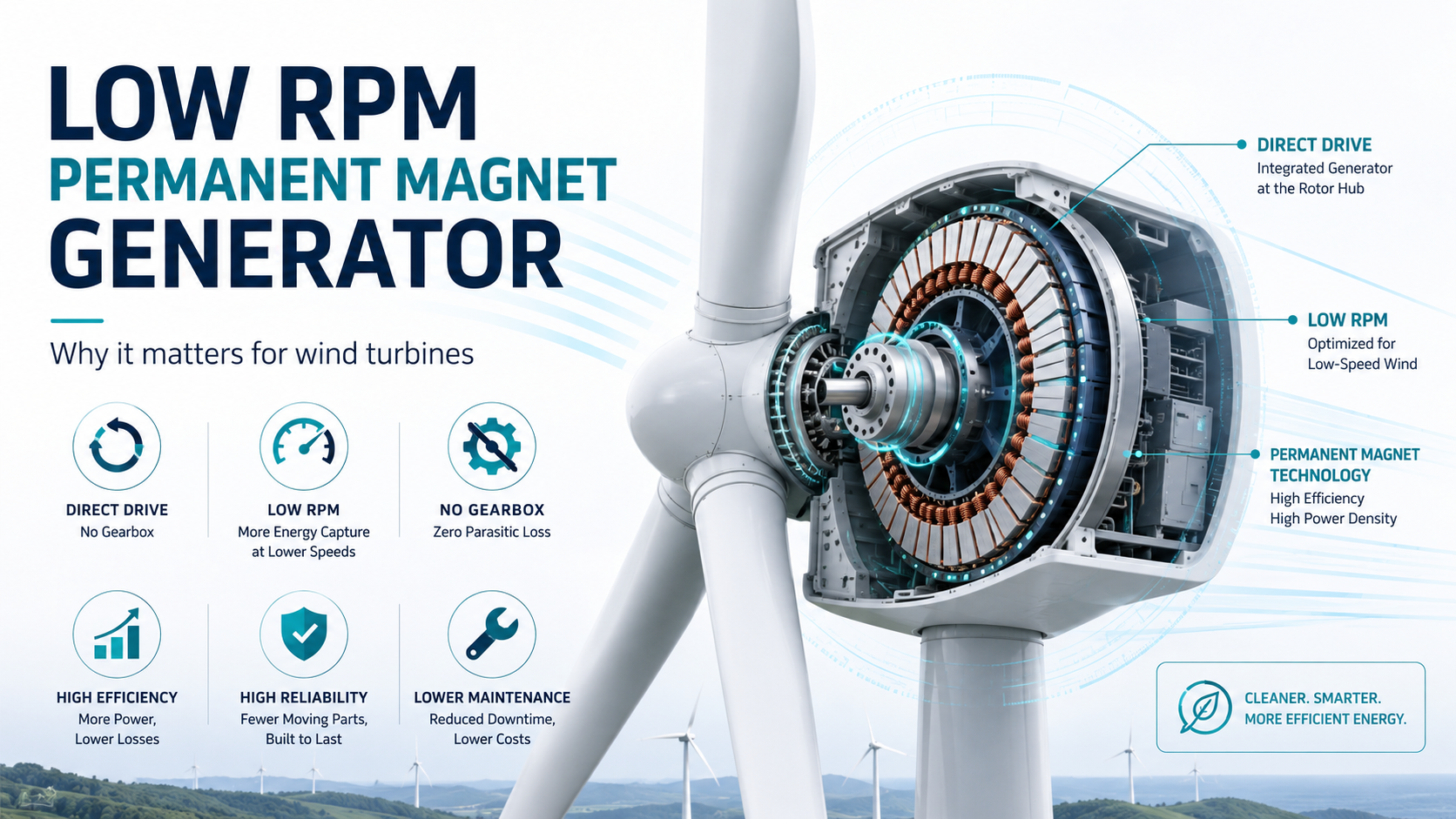 The transition from traditional gearbox-driven wind turbines to direct-drive architectures is reshaping operations and maintenance economics. Today, energy developers constantly seek reliable ways to maximize power yield while minimizing mechanical vulnerabilities.
 -
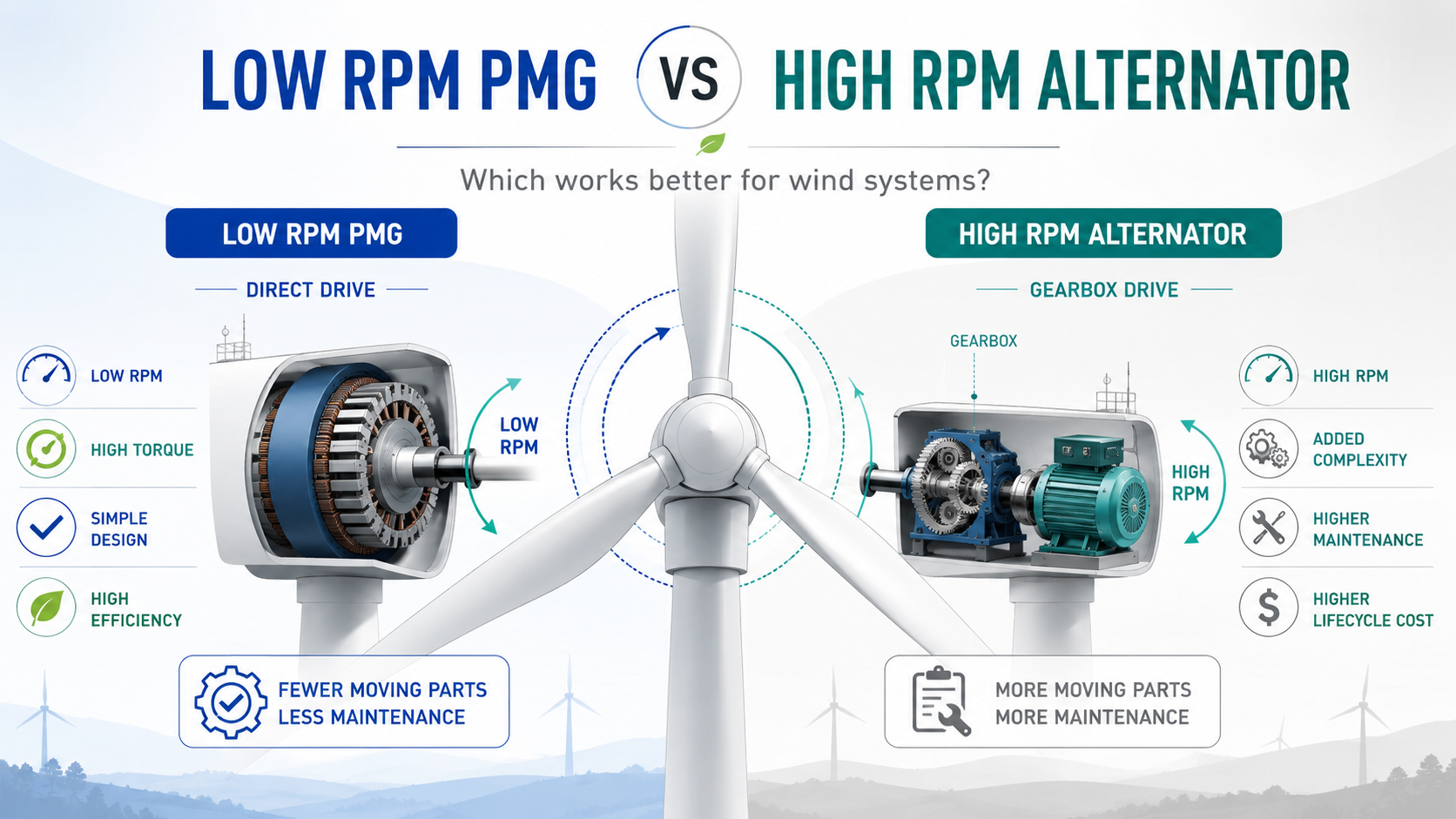 Harnessing wind power presents a fundamental mechanical mismatch. Wind turbine blades naturally capture the most energy at low rotational speeds. They generate massive physical torque. However, traditional power generation systems demand incredibly high RPMs to produce usable electricity.
 -
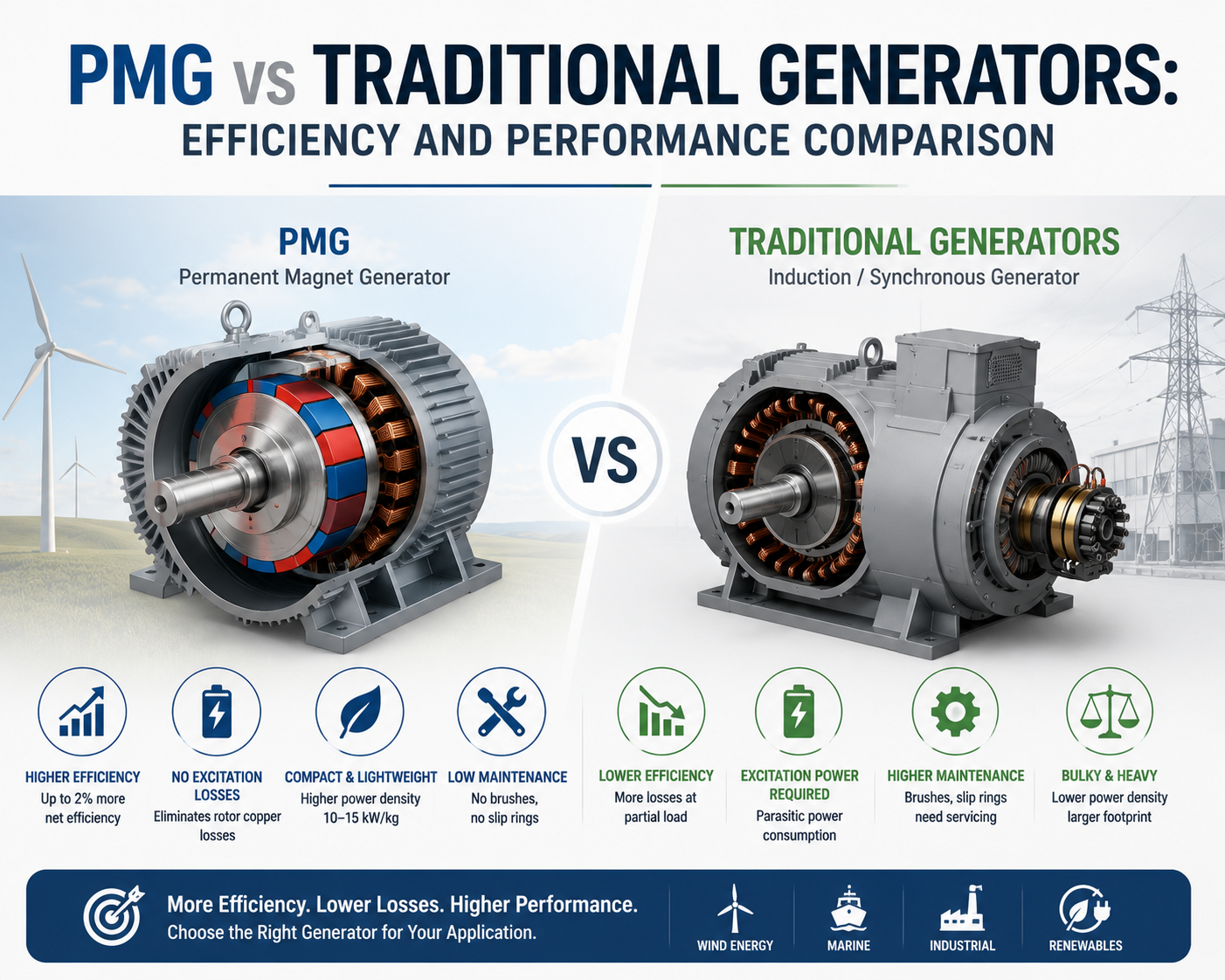 The transition to highly optimized renewable energy and industrial power systems has elevated the engineering debate between the permanent magnet generator and traditional asynchronous or synchronous alternators.
 -
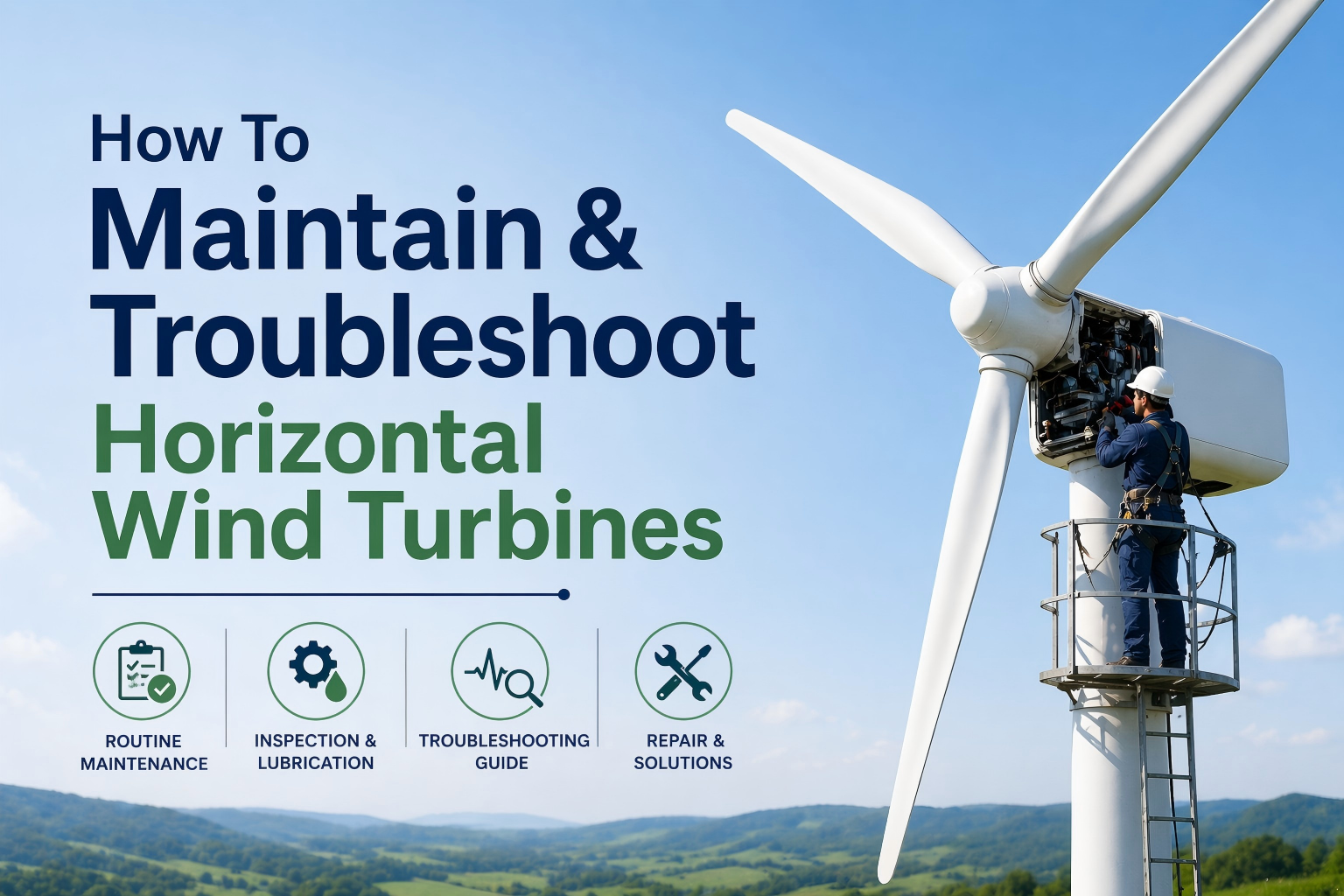 Commercial-scale wind energy serves as the backbone of the modern power grid. Yet, unexpected downtime quickly disrupts electrical supply and erodes operator profitability. Curtailment remains a massive operational headache for energy providers worldwide.
 -
 Installing a horizontal wind turbine is a rigorous engineering project. It demands strict civil, mechanical, and electrical compliance. You cannot treat it as a casual DIY weekend task. Physics establishes a hard boundary known as the Betz Limit.
 -
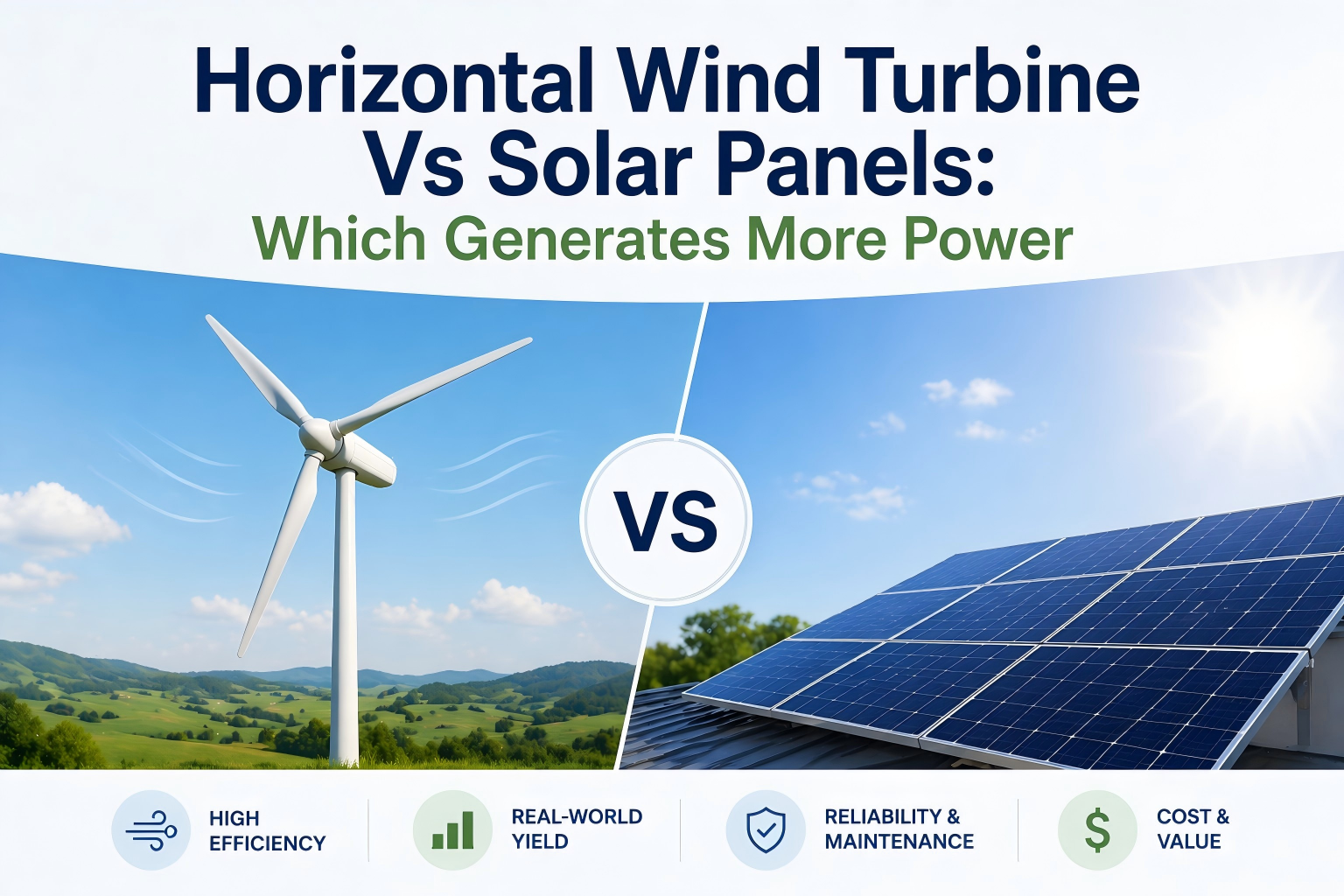 Buyers evaluating renewable energy often face a confusing dilemma. They struggle to separate theoretical energy efficiency from practical power yield. You want maximum electricity generation, but manufacturer brochures rarely tell the entire story.
